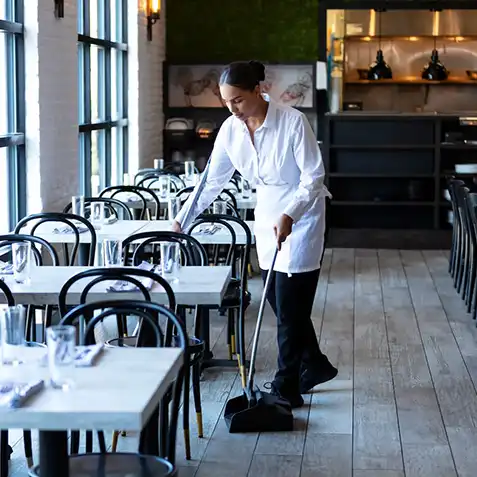
Cleaning of restaurants and cafes
Cleaning restaurants and cafés is a core element of maintaining safety, professionalism, and a positive guest experience. A well‑organized cleaning system protects food quality, prevents contamination, and strengthens the reputation of any food-service business. Cleanliness is not just a visual standard—it is a fundamental operational requirement that affects every aspect of daily work.
Why cleanliness matters in food-service environments
Restaurants and cafés handle food, equipment, and constant guest traffic, creating ideal conditions for bacteria and cross‑contamination if hygiene is neglected. A strong cleaning program helps ensure:
- compliance with sanitary regulations and inspections
- prevention of foodborne illnesses
- a welcoming atmosphere for guests
- longer lifespan of equipment and furniture
- a safer working environment for staff
Cleanliness directly influences customer trust and repeat visits.
Cleaning the kitchen and production areas
The kitchen is the highest‑risk zone in any restaurant. It requires strict, frequent, and methodical cleaning to maintain food safety.
Key tasks include:
- Work surfaces — cleaning and disinfecting after each use.
- Cutting boards and knives — sanitizing after every product to avoid cross‑contamination.
- Cooking equipment — removing grease from stoves, grills, ovens, and fryers.
- Ventilation systems — cleaning filters to prevent fire hazards and maintain air quality.
- Refrigeration units — scheduled defrosting and sanitizing to prevent mold and odors.
A clean kitchen supports consistent food quality and reduces operational risks.
Cleaning guest areas, bar counters, and coffee equipment
Guests notice cleanliness before they notice the menu. Dining rooms and bar zones must remain spotless throughout the day.
Important areas include:
- tables, chairs, menus, and condiment holders
- floors, carpets, and entrance zones
- bar counters, coffee machines, blenders, and juicers
- restrooms and handwashing stations
- waste bins and recycling points
Coffee equipment requires special attention: daily rinsing, backflushing, and regular descaling ensure stable drink quality and machine longevity.
Cleaning schedules and staff training
A successful cleaning system depends on clear organization. Every establishment should maintain a detailed cleaning schedule specifying:
- what needs to be cleaned
- how often
- which products and tools to use
- who is responsible
Training staff in hygiene standards, chemical safety, and proper cleaning techniques ensures consistent results and reduces mistakes.
Eco‑friendly cleaning practices
Modern restaurants increasingly adopt sustainable cleaning methods that protect both people and the environment.
Common approaches:
- biodegradable cleaning products
- microfiber cloths instead of disposable materials
- reduced water and energy consumption
- minimizing harsh chemicals where possible
Eco‑friendly cleaning supports a healthier workplace and strengthens a restaurant’s environmental image.
Why many businesses choose professional cleaning services
Outsourcing cleaning to a professional company offers several advantages:
- consistent, high‑quality results
- access to specialized equipment and certified cleaning agents
- reduced workload for restaurant staff
- flexible cleaning schedules, including night shifts
- accountability and quality control
Professional cleaning helps restaurants focus on what they do best—serving excellent food and creating memorable experiences.